Skip to content

Conversion Rate Optimisation (CRO)

We use website data to find where potential customers are dropping out, then test changes to improve the journey from visit to enquiry.

comp6

Organisations that trusted us to deliver their Website

We find out what's getting in the way.

If the right people are reaching your website but too few are taking the next step, we look at what happens between the two.

We start with the journey and the numbers. Which pages are people using? Where do they leave? Which calls-to-action get clicked? Which forms get completed? Are important routes being missed altogether?

That gives us somewhere useful to start.

We then make changes to the parts of the experience most likely to affect conversion. That could mean changing page content, calls-to-action, forms, page structure, trust evidence or the route into an enquiry.

Each change has a reason behind it and a clear measure of whether it worked.

See our success stories.

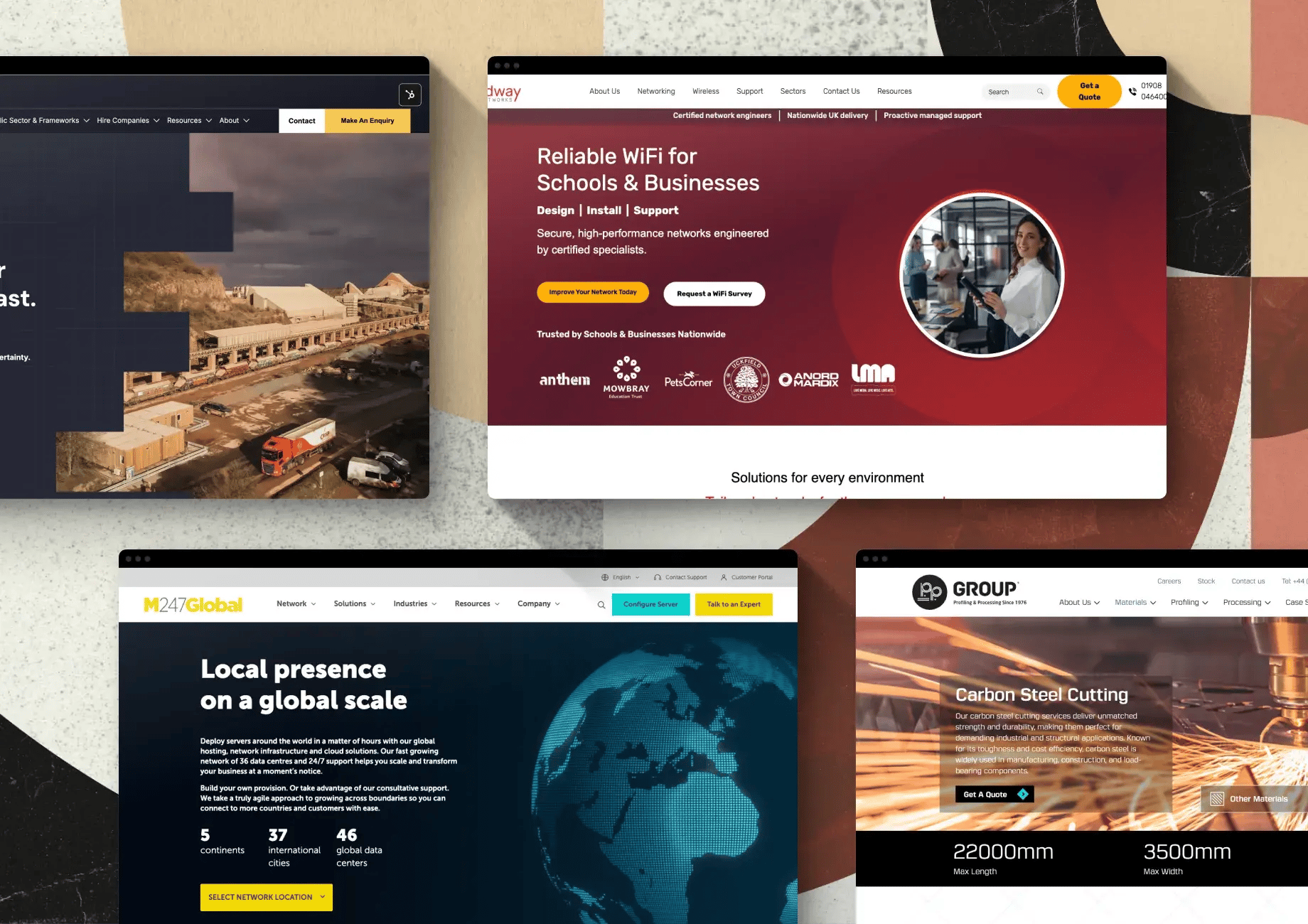
Here's a selection of websites we've conducted CRO on.

Inbound marketing and a HubSpot rebuild that grew Huthwaite’s online revenue 433% in a year.

CRO work that turned steady traffic into leads, lifting Dale’s visitor-to-lead conversions by 600%.

Improve the website using evidence

Frame 1321316349

01. Agree on what conversion means

Before changing the website, we agree what we are trying to improve.

That might be a sales enquiry, meeting booking, quote request, download or another meaningful action.

We then confirm how that conversion is recorded so there is one baseline against which the work can be measured.

Frame 1321316350

02. Understand the current journey

We look at how people currently move through the website.

That includes page performance, calls-to-action, forms and the routes into conversion. We look for points where users leave, miss the next step or encounter unnecessary friction.

Where useful, we also bring in qualitative evidence from user behaviour and feedback to help explain what the numbers are showing us.

Frame 1321316351

03. Decide what to test

We turn the findings into a prioritised experiment backlog.

Every test starts with a problem, a proposed change and the measure we expect it to affect.

That keeps the work focused on changes we can learn from rather than making a long list of website amends and hoping conversion improves.

Frame 1321316352

04. Make the change

We design and implement the agreed experiments.

That might involve page copy, calls-to-action, forms, content order, trust signals, mobile usability or a wider change to the conversion journey.

The scale of the change depends on the evidence behind it.

Frame 1321316353

05. Measure what happened

Once an experiment is live, we track its performance against the agreed baseline.

We look at whether the change improved the target conversion and whether there were any effects elsewhere in the journey.

Not every experiment will win. Knowing that is part of the process.

Frame 1321316354

06. Keep what works

Useful findings become permanent improvements to the website.

The results also give us the next set of questions to investigate, so the experiment backlog develops as we learn more about how people actually use the site.

CRO works best as a cycle rather than a one-off review.

What a CRO project costs.

The scope depends on the website, the amount of traffic available and how much testing and implementation is required.

A focused programme around a small number of priority journeys is different from continuous optimisation across a large B2B website.

Fill in this form and get our pricing guide to get an indicative cost for your website project.

Get our Pricing Guide

Conversion Rate Optimisation  FAQs

A CRO agency looks at how people use your website and identifies where the journey into enquiry or another important action can be improved.

That normally means analysing website performance, defining experiments, making changes and measuring what happens afterwards.

The objective is to make better use of the traffic the website already receives.

Conversion rate optimisation is the process of improving the percentage of website visitors who complete an action that matters to your business.

That action could be submitting an enquiry, booking a meeting, requesting a quote or completing another defined conversion.

CRO looks at what may be preventing that action and tests ways to improve it.

It depends on what the evidence points to.

We may test headlines, page copy, calls-to-action, forms and form fields, page layout, content order, trust evidence, mobile usability or the wider route someone takes through the website.

We do not start with a fixed list of things that every website needs to change.

We agree the conversion and reporting baseline before experiments start.

The measure depends on the test. That might be form conversion, CTA engagement, enquiry completion or movement into the next part of a journey.

For B2B organisations, we also look beyond the initial conversion where the CRM data allows it. More form fills are not particularly useful if they are the wrong form fills.

It can be either.

A focused engagement can investigate a specific journey or conversion problem. An ongoing programme allows us to maintain an experiment backlog, measure changes over time and use each result to inform the next improvement.

For websites with enough traffic and commercial importance, ongoing optimisation usually gives us more useful evidence than a single CRO audit.

Planning a B2B website project?

Rebuilding, moving off WordPress, or tired of waiting on a developer for every change? Tell us where you are.

We will give you a clear view of what to map first, how it would be built on HubSpot, and whether we are the right partner to help.

Talk Through Your Project